|
I’ve been working as a ski instructor for nearly 30 years.
Alpine skiing, telemark skiing, and cross-country skiing - regardless of
the discipline, I’ve been fortunate to receive many questions, and each
time I’ve thought things through and put my answers into words.
Accurately verbalizing your own movements is not easy. It requires considerable training. Then you put those words into writing and document them - and repeat the process. The accumulated trace of that work lives in the back numbers on my website.
Trying to put movement into words deepens the analysis.
Once it’s published on the web, someone reads it, develops a question, and eventually comes to see me. They ask. I answer. Or we think it through together. I believe that kind of cycle has value.
Now, I’m sometimes asked:
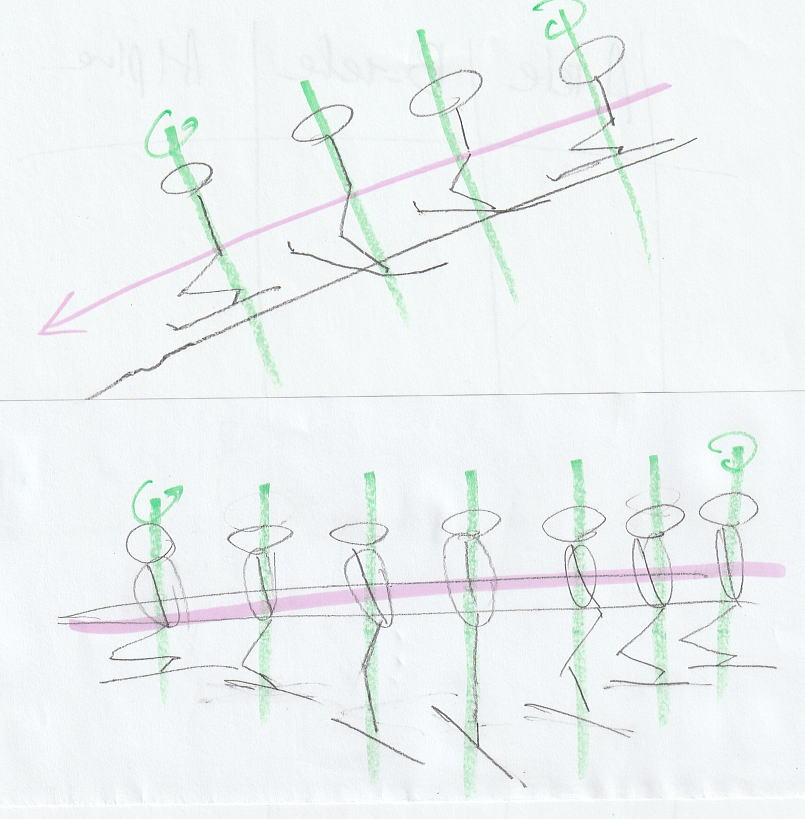
“Is up-and-down movement necessary in skiing?”
My answer is always the same:
“For alpine, yes. For telemark, there is also the option of not having it.”
The next question inevitably follows:
“What does telemark without up-and-down movement look like?”
At that point, I show them the “Ofuton Telemark” video and ask:
“Is this up-and-down movement?”
In reality, I’ve skied this way in many different places, on many different
kinds of equipment. Through repeated real-world experimentation, I’ve
arrived at the fastest path to reach the same level - in other words, the
method has been completed. It has been refined to the point where the entire
system can be conveyed in words.
If you’re interested, please come by. I’ll make time.
Oh, and the other day I had this exchange with a guest:
“Your skiing isn’t based on up-and-down movement, right?”
“That’s right.”
“Then is it bending?”
“No, not that either.”
“Then what is it?”
“The closest description would be walking down station stairs, just slightly in a hurry. Try to picture it. It’s probably neither stretching nor bending, right?”
“I suppose not…”
“Telemark is heel-free. Why not try thinking about it separately from
alpine?.”
|